Church of Meilikki
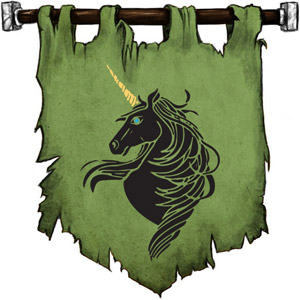
Type: Religious
Locations: Annun
Hierarchy
**Church of Meilikki**
         |
         Shadoweirs
Description
Organization
Initially, the Walkers of the Forest Way were composed almost entirely of clerics. They had little-to-no formal hierarchy, with senior clergy simply assembling networks of allies who could gather and disseminate information and would work together to realize the church's goals. Rangers who were members of the church or who were in direct service to it were a laity treated as an auxiliary force or adventuring division that could be set against enemies of the faith. Perhaps surprisingly, there were no druids at all by 1358 DR, but the church was on good terms with them.
Then, in 1369 DR, to halt the decline of her faith, Mielikki herself called for the church to be restructured. Druids were reintroduced and either joined the clerics as part of the new hierarchy (though they were still few in number in the years immediately after) or else established druid circles of their own dedicated to Mielikki in the North. In the new church, there were three great branches: the Heartwoods, the Arms of the Forest, and the Needles.
Heartwoods
Comprising dryads, hamadryads, and treants, these beings served as the voices of the spirits of the very trees and were considered the heart of the church.
Arms of the Forest - Also called the Forestarms, or simply Arms, and made up of the clerics and druids, this was the main body of the priesthood and its spiritual center. They were dedicated to protecting the forests. It was open to all humans, demihumans, and woodland beings of good and neutral character, but the majority were human and half-elf women who displayed a passion for their work, combat prowess, and adventuring habits. By and large, they were practical, disinterested in fuss and much ceremony, yet reverent in their prayers.
Needles - These were the rangers of the church.[1][7] They usually acted as a militant order that defended the forests against the church's enemies, but they could also act as priests themselves. Far from the lowliest, they were believed to be most beloved by Mielikki, the Supreme Ranger.
Shadoweirs are a subgroup of the Needles
Named for the greatest trees of the forests, the shadowtops and the weirwoods, the Shadoweirs are a highly secretive branch of the Old Faith that originated in the northern reaches of the High Forest of Henneth Annun and the Elder Forest. Its members consist of mostly human and some elven multiclassed druid/rangers. The Shadoweirs serve as a sort of religious knighthood of the woods. Unlike the Arms of the Forest or even the Needles, the Shadoweirs are an activist and proselytizing order who are willing to go on the offensive on the behalf of their sacred forests. They seek to advance the regrowth of ancient forests reduced by civilization and stem the flow of demonic activity from so many years of the Great Crevasse’s corruption. Many Shadoweirs are adventurers, wandering the forests of Aeriador with missionary zeal. They seek to halt the endless assault of civilization on their ancient homelands -'Faiths and Avatars' pg. 115
The Mielikkian faith has allies in the druids and rangers of the Old Faith and bards of the Old Lore who provide quiet sanctuary and supply to the Shadoweirs when they cannot receive support from those of their own religion.
Needles are given to dwelling in the forest. They often have two or more abodes and a dozen or more caches of food and items that they can travel to in times of need. They tend to be adventuresome and have easy-going dispositions. They are serene in their knowledge of the balance of natural cycles and at peace with all other sylvan faiths.
The ceremonial dress of the Shadoweirs is chain mail and deep forestgreen cloaks woven by dryads from spider silk and dyed with natural dyes. Many powerful forest knights wear ancient suits of elven chain mail they have been given by elven lords for their efforts in defending the forests. The symbol of the Shadoweirs is a giant shadowtop tree with a pair of crossed swords overlaying it, and it is sometimes stitched as a design on their clothing or worn on their shields. -'Faiths and Avatars' pg. 115
The order of woodland knights was formed in the woods of the treant Turlang as followers of Kalreshaar. Kalreshaar is an aspect of Mielikki and the name by which she is known in the elven realm of Arvandor. It is believed that Mielikki is the daughter of Hanali Celanil and Silvanus, making her the first half elven deity, although many Shadoweir now follow Gwaeron Windstrom. -'Gwaeron Windstom and Rangers of the North' from the DMs guild, paraphrased pg. 7
Titles
Members of the church were officially called the Walkers of the Forest Way,[1] and were sometimes known as Mielikkians,[11][13] which was also the adjective for the faith.[1][7][14] Circa 1479 DR, the priesthood was commonly called "druids".[14]
Among the Forestarms, titles were simple and few. The novices were called Questers, junior priests hadn't yet seen two winters in service were Spring Stags, and regular priests with experience but no significant achievements or temple duties were Stalkers in the Green. In the higher ranks, senior temple staff, emissaries, and recognized teachers of the faith were all Forest Flames. Among temple staff, titles were straightforward, such as Cook, Doorwarden, Housemaster, Worship Master, Master of Novices, Prior, and Abbot. At the highest levels, temple leaders and champions of the church were titled High Rangers. The goddess herself bestowed the title Hawk of the Lady on her most valued and highest-ranked faithful.[1]
Titles for Walkers of the Forest Way
These Titles are for all Clerics, Druids, and Rangers of Meilikki
Title Levels Other Titles and Positions
Questers 1 to 2
Spring Stags 2 to 3 Cooks
Stalkers in the Green 4 to 6 Doorwarden
Forest Flames 7 to 10 Housemaster, Worship Master, Master of Novices, Prior, Abbot
High Ranger 11+ Temple Leaders, Champions of the Faith
Hawk of the Lady 14+ Bestowed on the highest ranked Druid, Cleric, and Ranger
Classes
The restructured church of Mielikki included clerics and druids (both called Forestarms) and rangers (termed Needles).[1][6][7] It also included the unique half-elf druid/rangers, a type of specialty priest.[1]
Orders
Within each of the branches were a number of distinct religious orders. Some of the most notable were:
- Order of the Unicorn's Horn: A small society of wandering healers who aimed to bring peace to injured people, animals, and plants.[1]
- Shadoweirs: Part of the Needles, this was a religious knighthood of the woods made up of human, elf, and half-elf druid/rangers. They were activists who proselytized with zeal and would go on the offensive to save their sacred forests.[1]
- The Harpers: While not a part of the church of Mielikki, Those Who Harp had very close ties with the Walkers of the Forest Way.[1]
Rituals
To venerate the Forest Queen, one of the faithful needed only to spend some time in meditation and introspection in both the morning and evening, and do so under a forest's branches if possible.[1] Afterward, they listened to the whispers of the woods and tried to interpret their meaning,[1][6][7] for they believed the goddess to most often manifest her voice as a whisper in the rustling of leaves, echoing forever through all the forests of the world, and that a good and faithful worshiper could comprehend them.[1][12] Divine spellcasters following Mielikki could pray for spells in either the morning or evening, but were required to observe both events.[6][7]
At other times, when beseeching the goddess for aid or a blessing in a simple task such as treating an injured animal or following a trail, Mielikkians simply asked her under their breath for going ahead. When choosing to undertake a quest to right some wrong done to the woods, a Mielikkian would make a special prayer asking for guidance and strength. On special occasions, groups of them would assemble under the stars, to sing and praise the Lady of the Forest and call her to guide them.[1]
When lighting a fire, Mielikkian priests were required to whisper the Dread Prayer over it. Then, by the goddess's grace, it produced intense heat in so only selected directions, but very little smoke and only dim light. Thus, it drew little attention and could not spread, eliminating the risk of forest fires, so the Mielikkian need not watch the fire.[1]
Once a month, if not more often, all of the Walkers of the Forest Way were required to perform a ritual titled the Song of Trees, which called forth a dryad, hamadryad, or treant, and to perform various small deeds for it for a day.[1][6][7][note 1] Mielikki shielded the faithful from the dryad's charms. [1]
Mielikkians also held the equinoxes and solstices as holy days, called the Four Feasts, with the simple titles of First Feast, Second Feast, Third Feast, and of course Fourth Feast. Most familiar to those outside the faith but held deep in the woods, these were times of sacred rituals, songs of praise to the Forest Queen, and revels for celebration of the sensual side of life.[1][6][7] It was known that on the first, the spring equinox, herbs were burnt.[10]
The common festival days of Greengrass and Midsummer Night were similar to the Four Feasts but greater in scale, with additional planting rites and the grand Wild Ride. On these occasions, Mielikki brought unicorns together in herds that raced through the woods at a gallop. Walkers of the Forest Way were even allowed to mount these unicorns and ride them bareback all through the night.[1][6][7] Mielikki also empowered the unicorns to teleport as often as they wished and to thrice the usual range, so her followers could be taken incredible distances and see much of the world around them.[1] In the years of Shieldmeet, which occurred after Midsummer, the Wild Ride could continue through that day and night too, if unicorn and rider wished.[1][7]
Symbol
The raiment of the Walkers of the Forest Way was governed by the seasons, with each article of clothing having a specific base color and an accent depending on the season. In autumn, it was red with white accents, representing fallen leaves becoming covered with snow. In winter, it was white with green accents, for the evergreen trees under the snow and how the forest remained in full life. In spring, it was green with yellow accents, symbolizing the forest slowly returning to lushness. And finally, in summer, it was yellow with red accents, for the beauty and bounty of flowers, fruits, and grains.[3][1][7] Otherwise, the trappings of the faith were often in forest green.[10]
Their vestments comprised a plain tunic or tabard, which was typically sleeveless in summer and long-sleeved in winter, together with boots, trousers, and a short cape. All articles of clothing were in the seasonal colors, except the boots, which were always brown.[10][3][1][7] They had no headwear.[10] While working in the woods, most priests wore whatever befitted the weather and the task at hand, but they made an effort to display the seasonal colors, even if in hot weather this might be only a sash and baldric. Needed items were carried in pouches or packs or even strapped to their boots.[1] During times of conflict and adventuring, priests and rangers wore regular armor (often chainmail) with only their capes.[3][1][7]
They wore their holy symbols of Mielikki always over their hearts,[3][1][7] either stitched into the fronts of their tabards with silvery thread or as a pendant carved from bone or ivory.[1][7]
Magic
A number of spells and prayers were unique to Mielikkian priests or were closely associated with them:[16]
While within a forest environment, any cleric, druid, or ranger of Mielikki might use a form of the spell analyze balance whenever required. When cast on a type of creature, a specific individual, or an item, it functioned as normal,[1] yielding an estimate of its deviation from true neutrality.[17] But if cast on the forest itself, they could detect if the local ecology was significantly threatened.[1]
Clerics and druids initiated into the higher secrets of the church in the 1370s DR could cast the following unique spells:[18]
These they shared with the churches of Silvanus and Eldath. Moreover, they could rebuke or command animals or plant creatures.[18]
Circa 1479 DR, a priest of Mielikki could channel divinity and use the divine spell fleetness of Mielikki, becoming blessed with the speed and surefootedness of her sacred white hart.[19]